

The best kennel areas do not look busy. They look easy to work in.
For show dog owners, breeders, handlers, trainers, and multi-dog homes, the kennel area has a job every day. Dogs come in from outside. Pads get changed. Bowls get washed. Leads get hung up. Towels get used, forgotten, found, and used again.
When the layout is right, the routine gets quieter. When the layout is wrong, every task takes an extra trip across the room.
Start with the path you walk every day
Before adding shelves or buying more supplies, walk through the routine.
Where does the dog enter after being outside? Where do you feed? Where do you groom? Where do wet towels land? Where do show leads, collars, bowls, pads, and cleaning supplies end up when nobody has time to put them away neatly?
Build the space around those answers. If the towel hook is near the door, wet paws get handled faster. If the bowls are near the sink, washing them is less of a chore. If the leash hook is beside the kennel, loading for a show starts with less searching.
Choose kennels that match the workload
A show or breeder setup asks more from a kennel than occasional home use. Doors open and close all day. Dogs move in and out. Hardware gets handled often. The kennel may travel, fold down, sit in a staging area, then come back home.
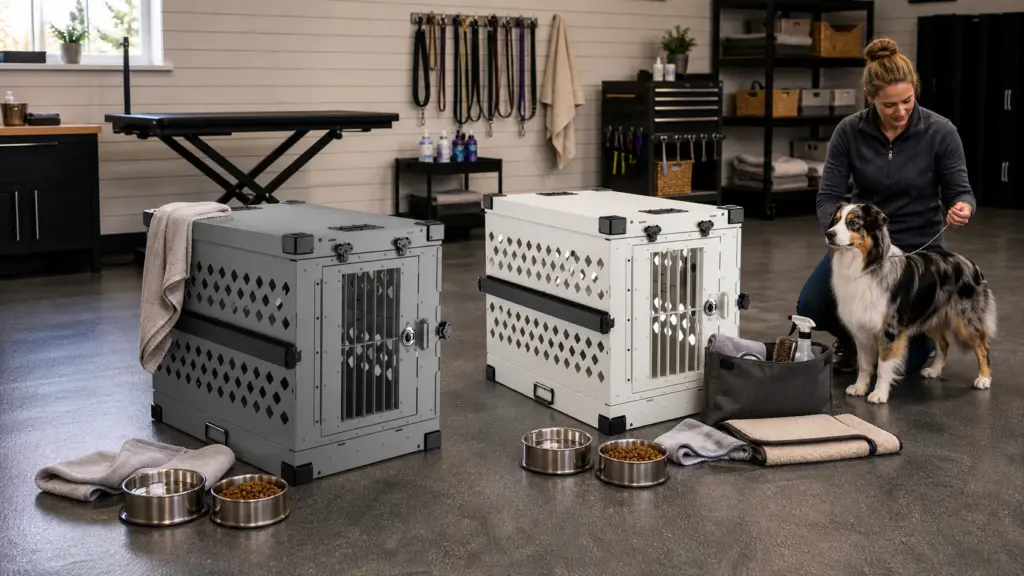
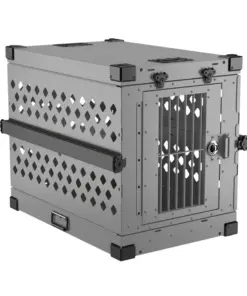
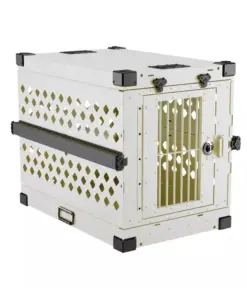
A strong aluminum kennel fits that workload. It looks organized, holds its shape, and gives the dog area a more finished feel. It also photographs well, which matters for breeders and businesses that want their space to reflect how seriously they care for their dogs.
Cut the clutter first
Clutter creates small problems all day. Loose leashes get stepped on. Food bags spill. A damp towel ends up on a crate top. A dog grabs something within reach. Someone needs a cleaning cloth and finds an empty shelf.
Keep the working area tight:
- One kennel space per dog
- Fitted pad or mat
- Hook for each leash or collar
- Shelf or bin for bowls
- Sealed food or treat container
- Towel spot near the entry
- Small cleaning kit within reach
- Labels for dogs, gear, or event bags when needed
Everything else can live somewhere else. The working space should hold the items used every day.
Leave room for air and hands
Kennels need airflow, and people need room to move. Do not crowd panels against boxes, blankets, or bags. Leave space for the door to open fully and for a person to kneel, remove bedding, wipe the floor, or handle a dog calmly.
Noise matters too. A kennel placed beside a loud door, compressor, washer, or busy hallway may keep a dog more alert than necessary. If you have options, choose the quieter wall.
Keep one travel kit ready
Show mornings are easier when the kit is already built. Keep a bag or bin stocked with the basics:
- Show lead or everyday leash
- Water bowl
- Food and treats
- Grooming towel
- Waste bags
- Fitted pad or mat
- Cleaning cloth or wipes
- Records, if the event requires them
- First-aid basics recommended by your veterinarian
If the kennel collapses for transport, practice setup and breakdown before the day you need it. The less you have to figure out in the parking lot, the better.
Use the kennel for rest
A good kennel area gives dogs a place to come down between activities. Shows, grooming, visitors, training, feeding, and travel all add stimulation. Dogs need breaks.
Use the kennel as part of a normal rhythm: exercise, handling, feeding, grooming, rest, and repeat. The kennel should feel familiar, not like a place the dog only sees when something stressful happens.
Make the space match the care
If clients, buyers, handlers, or friends see the kennel area, they read the space quickly. A clean aluminum kennel, organized supplies, dry towels, and clear walking paths say the dogs are cared for with attention.
Dog Kennels
Dog Training Supplies
Bowls & Feeders