

Kennel size looks simple until you try to choose one from a product page.
Weight charts help, but they do not tell the whole story. A lean sporting dog, a deep-chested bully breed, a long-backed hound, and a fluffy herding dog can all weigh about the same and need different space.
The right fit comes from measuring the dog, watching how the dog rests, and thinking about where the kennel will be used.
The quick fit test
A dog should be able to stand without crouching, turn around without scraping the sides, and lie down in a normal resting position. If the dog has to fold into the kennel, it is too small. If the kennel is so large that it wastes vehicle space or makes the dog feel unsettled, it may be too large for the job.
You are looking for usable room, not empty room.
Measure before you shop
Use a soft tape measure if you have one. If not, use a leash or piece of string, mark the length, and measure it afterward.
Measure three things:
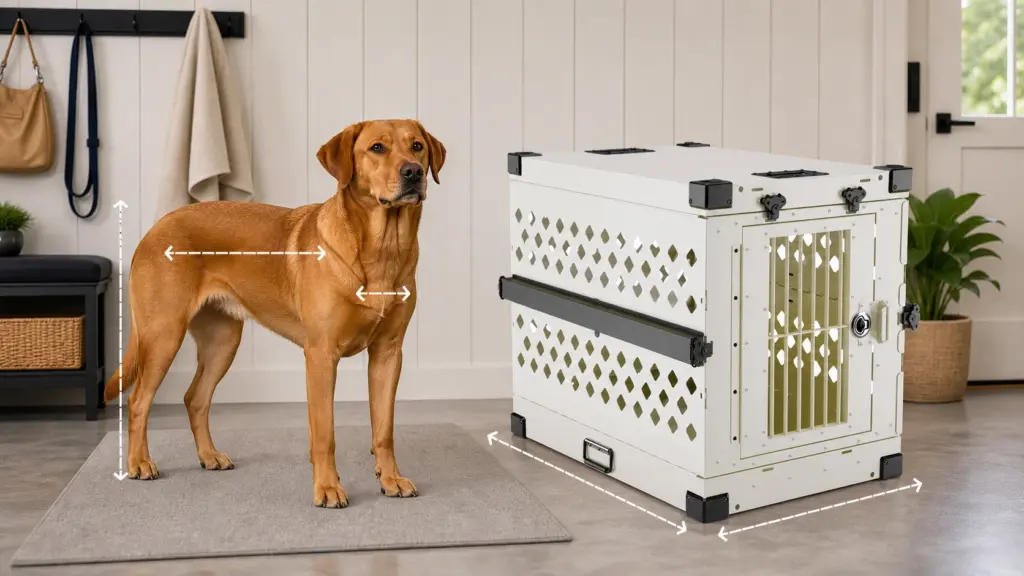
Length: Measure from the tip of the nose to the base of the tail. Do not include the full tail unless the dog’s tail carriage affects how they lie down.
Height: Measure from the floor to the top of the head while the dog is standing naturally. For dogs with upright ears, account for the ears if they stand tall in a relaxed posture.
Width: Look at the shoulders and chest. A dog with a broad front may need more turning room than a narrow dog of the same weight.
Then compare those measurements to the kennel’s interior dimensions, not only the outside dimensions.
Watch how your dog sleeps
Dogs have habits. Some curl tight against a wall. Some sprawl long. Some lean. Some circle three times, drop hard, and take up more space than their measurements suggest.
That sleeping style matters. A dog that stretches out every night needs a different fit than a dog that prefers a tucked, den-like space. Bedding changes the fit too. A thick pad can reduce standing height and make a close kennel feel smaller.
Before choosing a size, look at the dog in a normal resting spot at home. That tells you more than a weight chart.
Match the kennel to the use
A home kennel and a travel kennel have different pressures.
For home use, measure the room. Make sure the kennel door can open fully and that people can walk around it without turning sideways. A kennel in a mudroom, laundry room, bedroom, or garage dog area should feel placed, not jammed into the only available gap.
For vehicle use, measure the cargo area with the seats in the position you use for travel. Check height, depth, wheel-well space, and door clearance. Leave room for a leash, water bowl, towel, food bag, and whatever else travels with the dog.
For breeders, handlers, and trainers, consistency helps. If several dogs use the same area, clear sizing makes feeding, cleaning, loading, and event prep easier to repeat.
Common sizing mistakes
Do not choose by weight alone. Body shape matters too much.
Do not size only for a puppy unless you plan to replace the kennel. If the dog is still growing, think about adult size and how long you expect the kennel to last.
Do not forget the pad. A fitted mat, towel, or cushion takes up space.
Do not buy the biggest option by default. Bigger can make storage harder, travel harder, and placement harder. Some dogs also settle better in a space that feels defined.
Do not put two dogs in one kennel for convenience. Most dogs need their own space unless a product and situation are specifically designed for shared use.
Check the fit after setup
Once the kennel arrives, watch the dog move through it. Good fit looks relaxed. The dog walks in, turns, lies down, and can stand with a normal posture. The door closes without crowding the front of the body.
Poor fit looks awkward: crouching, scraping the back, refusing to turn around, standing stiffly, pressing into the door, or avoiding the kennel.
If the dog is nervous around crates, size may be only part of the issue. Placement, training, bedding, noise, and past experiences can all affect how the dog responds.
Make the size work for the whole routine
A well-sized kennel is easier to clean, easier to load, and easier to build into daily life. That is especially important for a collapsible aluminum kennel, because owners often want one setup that can move between home, vehicle, show site, and storage.
Measure the dog first. Measure the space second. Then choose the kennel that makes both numbers work.
Dog Kennels

Bowls & Feeders


Dog Supplies