
A kennel works best when the dog sees it as a familiar place to rest.
That does not happen by shutting the door and hoping the dog adjusts. It happens through short sessions, a calm routine, and a setup that makes sense to the dog.
Used well, a kennel can help with travel, sleep, house routines, recovery instructions from a veterinarian, and busy moments at home. Used poorly, it can teach a dog to avoid the crate or panic when the door closes.
Start slowly.
Let the dog investigate first
Set the kennel in a calm part of the home and leave the door open. Put a treat near the entrance. Later, place one inside. If the dog steps in, keep your voice easy and let the dog come right back out.
Do not push the dog in. Do not close the door on the first curious step. The first lesson is simple: this space is safe to explore.
Some dogs walk in right away. Others need a few days of sniffing, stretching their neck toward a treat, and backing out. That is still progress.
Make the inside comfortable and safe
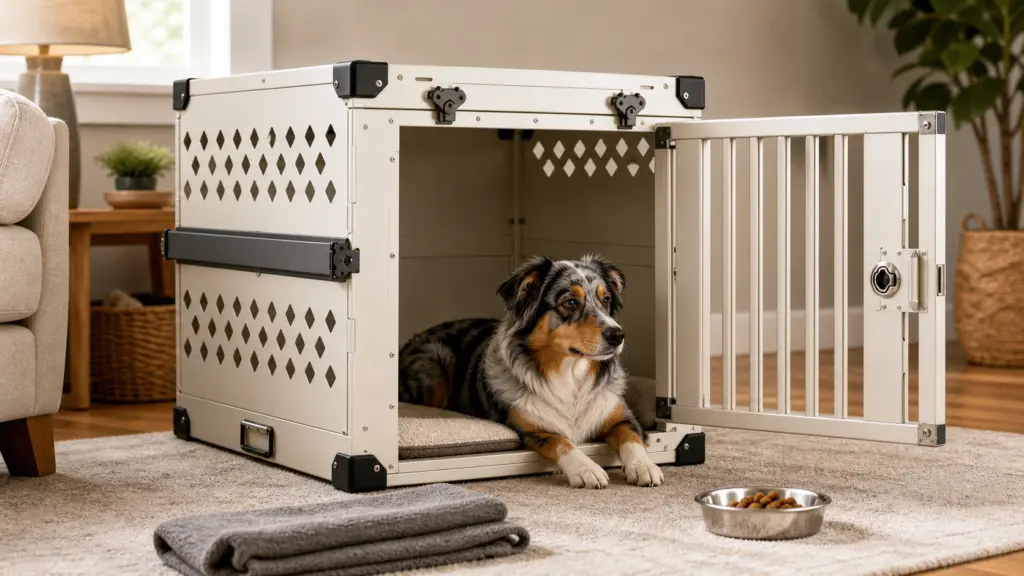
A fitted pad or mat can make the kennel more inviting. Some dogs like a towel. Some chew towels into pieces. Some run hot and need less bedding. Choose for the dog in front of you.
If your dog destroys soft items, avoid anything that could become a choking or blockage risk. If your dog has medical needs, orthopedic concerns, or recovery instructions, ask your veterinarian what bedding makes sense.
Comfort counts, but safety wins.
Use meals to build trust
Food can turn the kennel into a normal part of the day.
Start with meals near the kennel. Then move the bowl inside the open door. Over time, place it farther in. Once the dog is relaxed, close the door for a few seconds while the dog eats, then open it before the dog worries.
Short, clean repetitions are better than one long session that ends with barking, pawing, or stress.
Safe enrichment items can help too, but watch the dog first. A chew that works in the living room may not be safe for every dog in a closed kennel.
Add time in small pieces
Many crate problems come from moving too quickly. A dog can be comfortable walking into the kennel and still be unready for thirty minutes with the door closed.
Build time like this:
- Dog enters with the door open.
- Door closes for a second and opens again.
- Door closes while the dog eats a treat.
- Dog rests briefly while you sit nearby.
- You step away for a moment and return before the dog gets upset.
- The time increases only when the dog stays relaxed.
If the dog barks, shakes, drools, paws, or tries to escape, back up. The dog is telling you the step was too much.
Keep punishment out of it
Do not send the dog to the kennel because you are angry. Do not yell, point, and make the kennel the place where trouble ends.
You can use the kennel for management – for example, when workers come into the house or guests arrive – but keep the routine neutral. Give the dog a reason to settle, then let the kennel do its quiet work.
Practice on ordinary days
A kennel used only during emergencies becomes suspicious. Practice when nothing special is happening.
Try a short rest after a walk. Try five calm minutes while you fold laundry. Let the dog nap with the door open. Put the travel pad inside before a road trip so it smells familiar by the time you leave.
The kennel becomes easier when it is part of normal life.
Know when the issue is bigger than the crate
Some dogs need professional help. If your dog has separation anxiety, confinement panic, a history of breaking out of crates, or strong fear around kennels, work with a qualified positive-reinforcement trainer or a veterinary behavior professional.
A stronger kennel can help with structure, but it does not replace behavior support.
Why equipment still matters
Training does the real work, but the kennel can make the work easier or harder. A crate that rattles, flexes, pinches, or feels unstable can add stress. A sturdy, well-ventilated kennel with a clean interior gives the dog and owner a better starting point.
MYDOG™ collapsible aluminum kennels are a fit for owners who want the crate to serve home, travel, and everyday routines without feeling temporary.

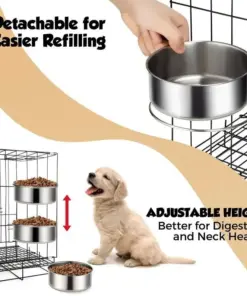
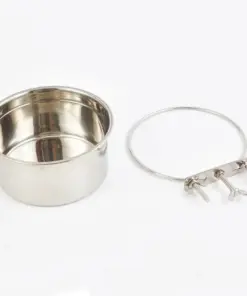
Bowls & Feeders