

One reason people choose aluminum kennels is cleanup.
Hair, dust, mud, drool, food crumbs, and wet paw prints are part of living with dogs. A kennel that wipes down easily makes the whole routine less annoying, especially for owners who use the same kennel at home, in the vehicle, and at events.
Aluminum is practical, but it still needs care. A few small habits keep the kennel looking sharp and working the way it should.
Do a quick daily reset
A daily reset takes a minute or two. Look for loose hair, dirt, food crumbs, damp bedding, spilled water, chewed items, and anything caught near the door or latch.
Remove the pad or mat. Shake it out or wash it if needed. Wipe the floor and lower panels if the dog came in wet or muddy. Dry the surface before putting bedding back.
This small reset keeps odor down and helps you notice wear before it becomes a problem.
Deep clean on a schedule
How often you deep clean depends on use. A home kennel for one clean dog may need less attention than a show, travel, breeder, or training setup.
For a deeper clean:
- Remove bedding, bowls, toys, and loose items.
- Vacuum or sweep out hair and grit.
- Wipe the interior panels with a pet-safe cleaner.
- Clean around ventilation openings.
- Wipe the door, latch area, corners, and floor.
- Dry all surfaces before replacing bedding.
- Wash pads, towels, or mats according to their care labels.
If there has been illness, parasites, or a medical issue, ask your veterinarian what cleaning or disinfecting method to use. Different problems require different products and contact times.
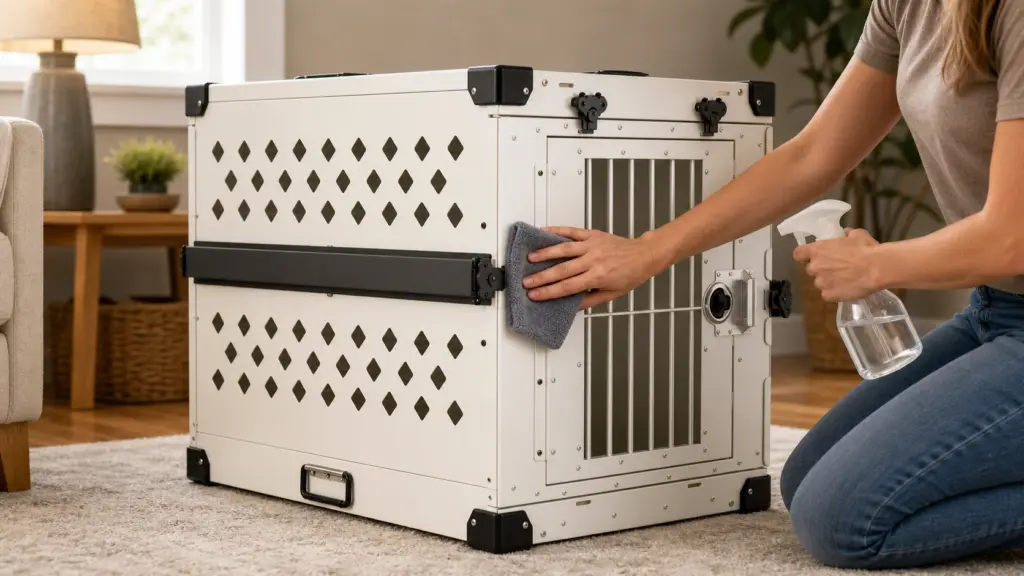
Check latches and hardware
The door does the most visible work. Make it part of the cleaning routine.
Check that the door opens smoothly, latches engage, hinges move as expected, and fasteners do not look loose. Look over corners, feet, handles, and any folded sections if the kennel collapses.
If a latch suddenly feels different, do not ignore it. Hardware is part of the kennel’s safety and daily usefulness.
Keep ventilation clear
Ventilation openings collect hair and dust, especially in garages, vehicles, show buildings, and training spaces.
When you wipe down the kennel, look at the openings from both sides. Clear away buildup and keep bags, blankets, boxes, and gear from blocking airflow around the kennel.
Airflow depends on the room around the kennel, not only the holes in the panel.
Clean after travel
Travel adds a layer of grime: road dust, hotel floors, parking lots, grass, event buildings, and whatever the dog walked through before loading up.
After a trip, remove the bedding, wipe the kennel inside and out, clean the bottom and feet, check the latch and corners, and let everything dry before storage. Restock the travel kit at the same time so the next trip does not start with missing supplies.
This is one of the easiest habits to skip and one of the most useful to keep.
Avoid harsh cleaning shortcuts
Use cleaners that are safe for the kennel finish and safe around dogs when used as directed. Avoid abrasive pads, harsh chemicals, or careless spraying unless the manufacturer recommends them.
Wipe away residue when needed and dry the kennel fully. Dogs spend time close to these surfaces, so cleaning products should be chosen with that in mind.
When in doubt, start mild and follow the product care guidance.
Store it clean and dry
If the kennel folds for storage, clean it first. Dirt and moisture are easier to handle today than after a few weeks in a corner.
Store damp towels, pads, or bowls separately. A clean kennel with musty bedding inside will not stay clean for long.
Keep the product looking like the product
MYDOG™ kennels are meant to look sharp in real spaces: homes, vehicles, show areas, dog rooms, and training setups. Regular cleaning protects that look and keeps the kennel ready for the next use.
The routine does not need to be complicated. Wipe it down, check the hardware, clear the airflow, dry it, and put it away clean.
Dog Training Supplies

Dog Supplies